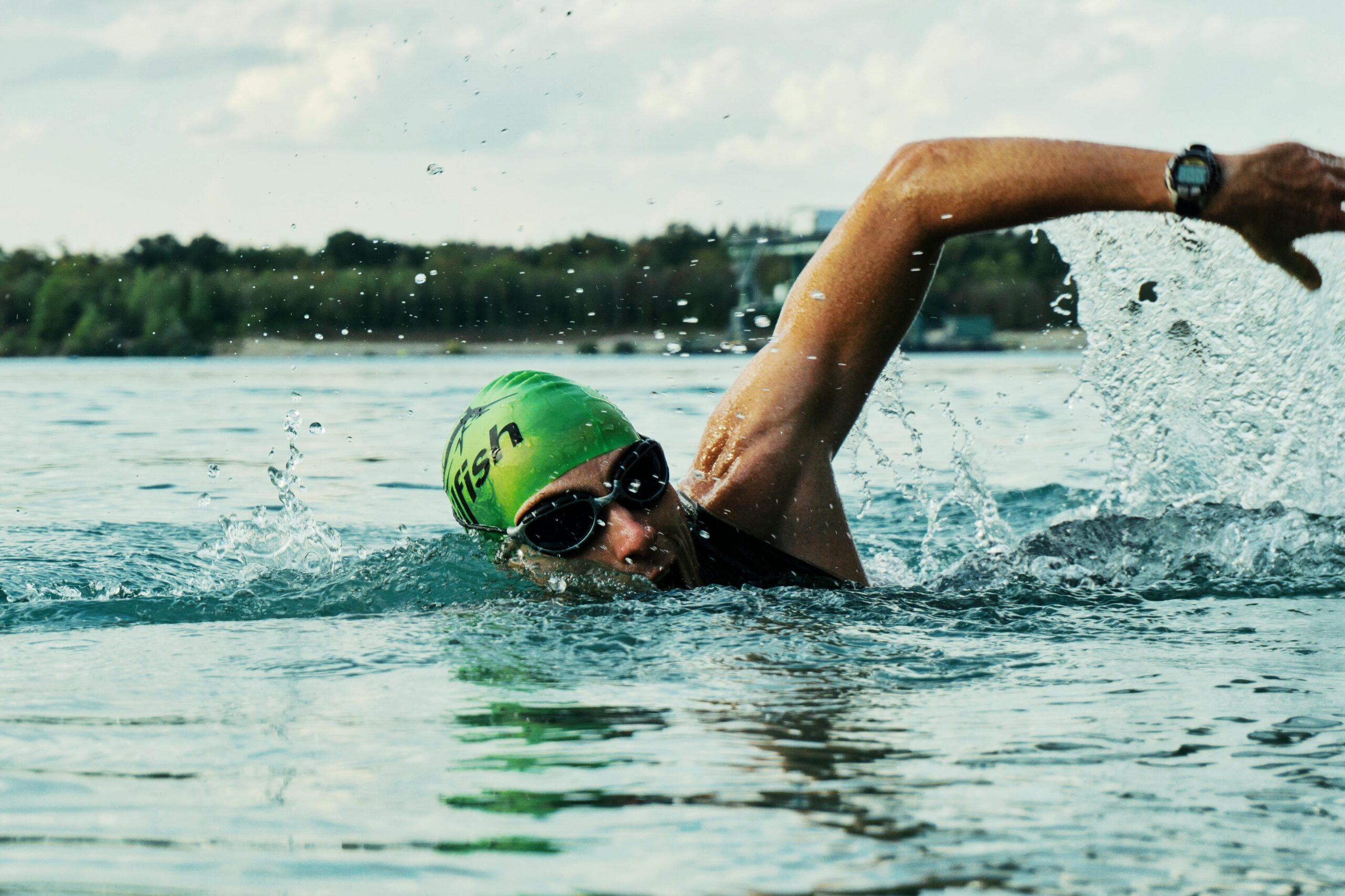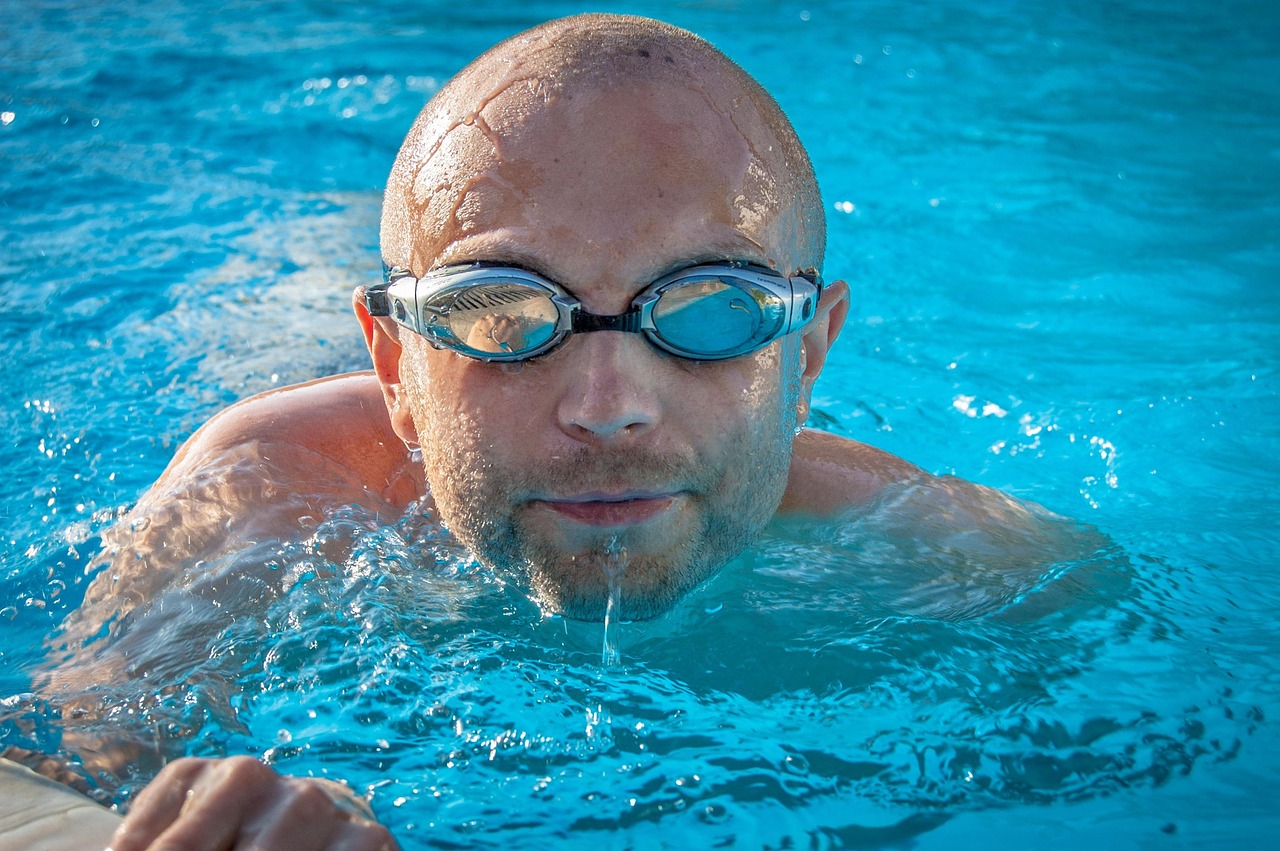
Mastering the freestyle stroke is the gateway to transforming your swimming from mediocre to magnificent. Whether you’re a competitive swimmer chasing personal records or a fitness enthusiast seeking efficient workouts, perfecting your arm stroke technique is absolutely essential for speed, power, and endurance in the water.

The freestyle arm stroke is arguably the most technically demanding aspect of swimming, yet it’s also the most rewarding when executed correctly. Understanding the biomechanics, practicing proper form, and developing muscle memory can revolutionize your performance and make every lap more productive and enjoyable.
🏊♂️ Understanding the Freestyle Arm Stroke Fundamentals
The freestyle arm stroke consists of several distinct phases that work together in a continuous, fluid motion. Each phase plays a critical role in propelling you forward efficiently while minimizing energy waste and reducing injury risk.
Before diving into advanced techniques, you must understand that your arms provide approximately 90% of your propulsion in freestyle swimming. This makes arm technique far more important than kick for most swimmers. The remaining 10% comes from your kick, which primarily serves to stabilize your body position rather than generate significant forward movement.
The Five Essential Phases of the Freestyle Stroke
Breaking down the arm stroke into manageable components helps swimmers focus on specific improvements:
- Entry: The moment your hand enters the water ahead of your shoulder
- Catch: When you establish grip on the water and prepare to pull
- Pull: The power phase where you accelerate water backward
- Push: The finishing drive past your hip
- Recovery: The relaxed return of your arm above water
⚡ Perfecting Your Entry: The Foundation of Every Stroke
Your hand entry sets the tone for the entire stroke cycle. A poor entry creates drag, disrupts your body position, and wastes precious energy before you even begin pulling.
The ideal entry occurs with your fingertips first, at approximately a 45-degree angle to the water surface. Your hand should enter between your head and shoulder line—not too wide, not crossing your centerline. Think of slicing through a mail slot rather than slapping the water surface.
Your elbow should remain higher than your hand during entry, creating what coaches call a “high elbow” position. This alignment prevents shoulder strain and positions your arm optimally for the catch phase. Many swimmers make the mistake of entering with a flat hand or leading with their elbow, both of which significantly reduce stroke efficiency.
Common Entry Mistakes to Avoid
Watch for these frequent errors that sabotage your stroke from the very beginning:
- Crossing over the centerline (creates wiggling and slows you down)
- Entering too wide (increases drag and shoulder stress)
- Slapping the water (wastes energy and creates turbulence)
- Entering with thumb first (rotates shoulder internally, risking injury)
- Overreaching or stretching too far forward (compromises body position)
🎯 Mastering the Catch: Where Power Begins
The catch phase is where elite swimmers distinguish themselves from recreational swimmers. This is where you establish your “hold” on the water—the feeling of gripping something solid that you can push against.
After entry, extend your arm forward while maintaining a slight downward pitch with your fingertips. Your elbow should bend gradually as you press downward and outward slightly, creating the high elbow position that’s crucial for an effective pull. Imagine reaching over a barrel or beach ball floating in front of you.
The catch happens when your forearm becomes vertical to the pool bottom, with your hand and forearm forming a single paddle surface. This typically occurs when your hand is about 6-12 inches below the surface. The faster you can achieve this vertical forearm position, the sooner you can begin generating propulsion.
Developing Your Feel for the Water
Top swimmers describe the catch as “feeling” the water. This tactile awareness develops through consistent practice and focused attention. During your catch, you should sense pressure building on your palm and forearm—not just your hand.
Practice sculling drills to enhance your water sensitivity. These slow, controlled movements help you understand how different hand positions and movements create resistance and propulsion. The better your feel for the water, the more efficiently you’ll capture and push water backward.
💪 The Pull Phase: Generating Maximum Propulsion
The pull phase is where you generate the majority of your forward momentum. After establishing your catch, you pull your hand and forearm backward along an S-curve or I-curve path beneath your body.
Modern technique favors a straighter pull path compared to the exaggerated S-curve taught decades ago. Focus on pulling directly backward rather than sweeping side to side excessively. Your hand should track underneath your body, passing below your chest and stomach.
Throughout the pull, maintain that high elbow position with your elbow bent approximately 90-120 degrees at mid-pull. Your forearm remains perpendicular to your direction of travel, maximizing the surface area pushing water backward. Think of your hand and forearm as a single paddle unit, not just your hand.
Acceleration Through the Pull
The key to an powerful pull is acceleration. Your hand should continuously speed up from catch through push, reaching maximum velocity as it passes your hip. Many swimmers make the mistake of pulling hard initially then decelerating—this actually creates drag and slows you down.
Imagine your hand moving at speed levels of 1-2-3-4-5 as it travels from catch to finish, with 1 being the slowest at catch and 5 being fastest at the push. This progressive acceleration maximizes propulsion according to Newton’s laws of motion.
🚀 The Push Phase: Finishing Strong for Extra Speed
The push phase begins as your hand passes beneath your chest and continues until your arm fully extends past your hip. This often-neglected portion of the stroke can add significant speed if executed properly.
Many swimmers cut their stroke short, releasing pressure before fully extending their arm backward. This premature release wastes potential propulsion. Your hand should push all the way past your hip with your thumb brushing your thigh as you finish.
During the push, your elbow begins to straighten, but your hand continues accelerating backward and slightly upward toward the surface. This upward component at the finish helps lift your arm naturally into the recovery phase. The push should feel like flicking water backward toward your feet.
🔄 Recovery: The Art of Relaxation and Repositioning
The recovery phase is your opportunity to rest your arm muscles while repositioning for the next stroke. Paradoxically, many swimmers waste energy during recovery by tensing muscles unnecessarily or using inefficient movements.
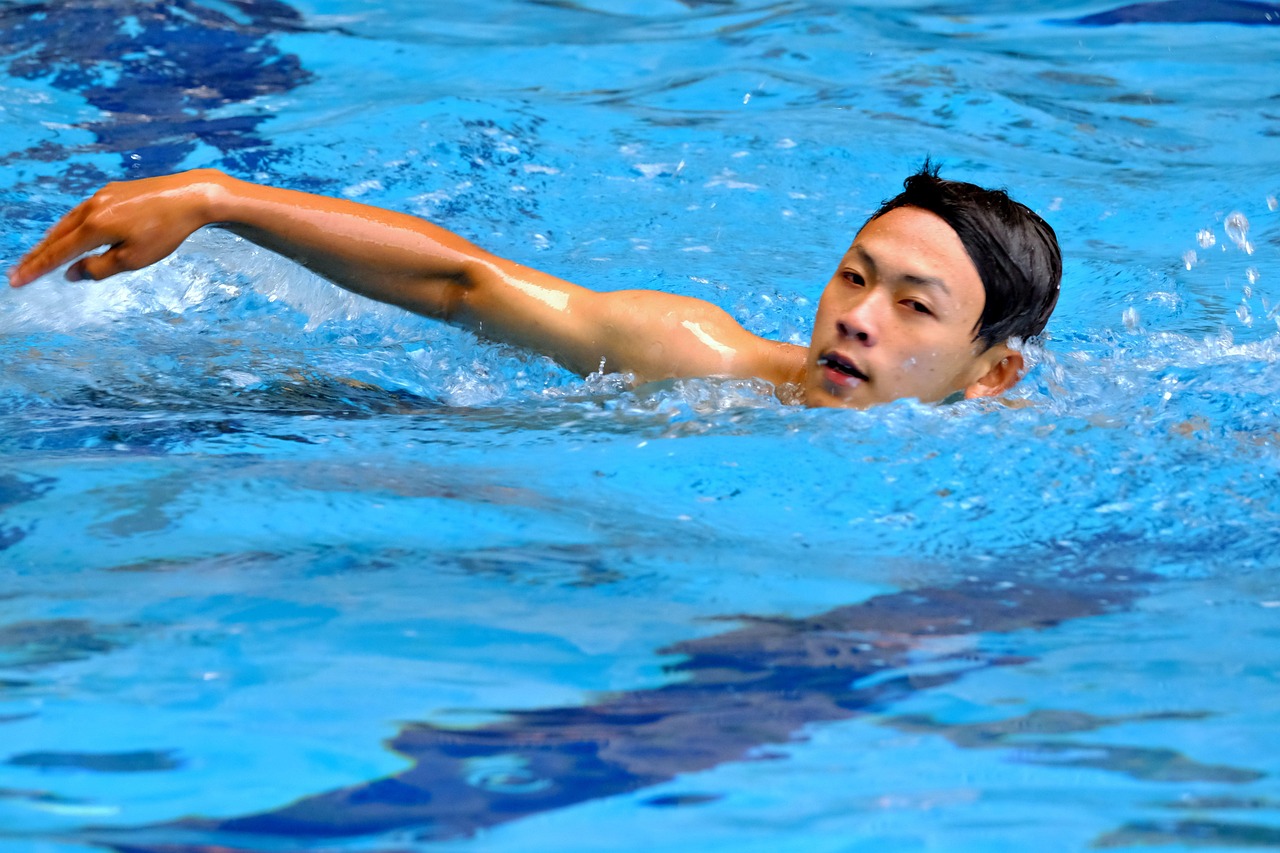
Your recovery should be relaxed, with your elbow leading the movement upward and forward. Your hand trails behind your elbow, traveling close to your body in a relaxed, natural arc. Think of your arm as a whip, with your elbow as the handle and your hand as the tip.
The high elbow recovery not only conserves energy but also helps maintain proper body rotation and prevents the shoulder strain that comes from a straight-arm recovery. Your hand should feel almost floppy during recovery, completely tension-free.
Timing Your Recovery with Body Rotation
Your recovery coordinates with your body rotation. As your recovering arm swings forward, your body rotates toward that side, creating a streamlined position and allowing your shoulder to clear the water easily. This rotation is powered by your core muscles, not just your shoulders.
Proper timing ensures your recovering hand enters the water just as your opposite hand begins its pull phase, creating a continuous propulsion system with no dead spots where neither arm is generating forward movement.
📊 Stroke Rate vs. Distance Per Stroke: Finding Your Balance
Two metrics dominate freestyle efficiency discussions: stroke rate (how quickly you cycle your arms) and distance per stroke (how far you travel with each stroke). Elite swimmers optimize both, but the balance depends on distance and racing strategy.
| Distance | Typical Stroke Rate | Focus |
|---|---|---|
| 50m Sprint | 80-100 strokes/min | Maximum turnover, high power |
| 100-200m | 70-85 strokes/min | Balance of power and efficiency |
| 400m+ | 60-75 strokes/min | Distance per stroke, efficiency |
| Open Water | 65-75 strokes/min | Sustainable rhythm, sighting |
Most swimmers benefit from increasing their distance per stroke before working on stroke rate. Longer, more efficient strokes require less energy than choppy, rapid strokes that generate minimal propulsion. Count your strokes per length and work to reduce that number while maintaining or improving your speed.
🎓 Advanced Techniques for Competitive Edge
Once you’ve mastered the basics, these advanced techniques can provide incremental improvements that separate good swimmers from great ones.
The Front Quadrant Technique
This timing approach ensures one hand remains extended in front of your head (in the front quadrant) before the other hand enters. This creates better body position, reduces drag, and prevents the dead spot that occurs when both arms are simultaneously beside or behind your body.
Front quadrant swimming feels slower initially because you’re deliberately pausing your extended arm. However, the improved body position and stroke efficiency typically result in faster overall times with less effort.
Strategic Breathing Integration
Your breathing pattern dramatically affects your arm stroke mechanics. Poor breathing technique creates asymmetries, disrupts rhythm, and reduces propulsion. Breath to one side during training if comfortable, but develop bilateral breathing ability for racing flexibility.
Initiate your breath rotation as your pulling arm passes under your chest. Your face should rotate with your body—not lift up—keeping one goggle in the water. Complete your breath early in the recovery phase, returning your face to neutral before your hand enters.
🏋️ Dryland Training for Stronger, More Efficient Strokes
Your arm stroke power and endurance depend significantly on strength training outside the pool. Targeted exercises develop the specific muscles used in freestyle while improving shoulder stability and injury resistance.
Focus on exercises that mimic swimming movements: band pulls, cable rotations, and medicine ball throws. Strengthen your lats, core, and rotator cuff muscles. However, avoid overbuilding bulk muscle that adds weight without functional swimming benefit.
Flexibility work is equally important. Improved shoulder mobility allows better hand entry position, higher elbow recovery, and reduced injury risk. Incorporate dynamic stretching before swimming and static stretching afterward.
📱 Technology and Tools for Stroke Analysis
Modern swimmers have unprecedented access to tools that provide objective feedback on technique. Underwater cameras, wearable sensors, and specialized apps can identify specific areas for improvement that you can’t feel or see yourself.
Video analysis remains one of the most valuable training tools. Record yourself from side, front, and underwater angles. Compare your technique to elite swimmers, focusing on one stroke phase at a time. Small adjustments based on video feedback can yield dramatic improvements.
Tempo trainers help you practice specific stroke rates, developing the rhythm and consistency essential for racing. Stroke counters track your distance per stroke, allowing you to monitor efficiency improvements over time.
🔥 Putting It All Together: Your Path to Freestyle Mastery
Perfecting your freestyle arm stroke is a journey, not a destination. Even Olympic champions continuously refine their technique, seeking marginal gains through subtle adjustments. Approach your improvement systematically, focusing on one element at a time rather than trying to fix everything simultaneously.
Start each practice session with technical focus. Swim slower with perfect form before attempting speed work. Use drills that isolate specific stroke phases: catch-up drill for timing, single-arm drill for pull mechanics, and fingertip drag for high elbow recovery.
Record your baseline metrics—strokes per length, times for various distances, and subjective effort level. Retest monthly to track improvements and identify areas still needing work. Celebrate progress while maintaining long-term perspective on skill development.
Creating Your Personalized Improvement Plan
Every swimmer has unique strengths and weaknesses. Design your training around your specific needs rather than following generic programs. If your catch is weak, dedicate extra time to sculling drills. If your finish is premature, focus on full extension and acceleration patterns.
Work with a qualified coach when possible. External observation identifies technique flaws you can’t perceive internally. Even occasional coaching sessions provide valuable feedback and prevent the development of bad habits that become increasingly difficult to correct.
💡 Consistency Breeds Excellence in the Water
The swimmers who achieve true mastery share one characteristic: consistent, focused practice over extended periods. Technique improvements require thousands of repetitions to become automatic, transforming conscious movements into unconscious habits.
Commit to regular pool time with quality over quantity. Three focused 45-minute sessions weekly trump seven unfocused hour-long swims. Each lap should have purpose, whether you’re working on a specific technical element, building endurance, or practicing race pace.
Remember that fatigue destroys technique. When you’re exhausted, your form deteriorates and you practice bad habits. End sessions before complete exhaustion, finishing with easy swimming that reinforces proper mechanics. Your last repetitions should look like your first.
Perfect freestyle technique is achievable for every dedicated swimmer willing to invest time in deliberate practice. By understanding the biomechanics of each stroke phase, avoiding common mistakes, and consistently applying proper technique, you’ll unlock new levels of speed, power, and efficiency that transform your swimming experience. The water rewards those who respect its properties and work with—not against—the principles of fluid dynamics. Dive in, focus on the fundamentals, and watch your freestyle stroke evolve into a powerful, efficient, and beautiful movement pattern that carries you effortlessly through lap after lap. 🏊♀️