Mastering your kicking technique transforms your martial arts practice from basic movements into explosive, precise strikes. Wall and board progression drills offer a structured pathway to develop power, accuracy, and confidence in your kicks.

Whether you’re a beginner learning proper form or an advanced practitioner seeking to break through plateaus, these training methods provide tangible feedback that accelerates your development. The tactile response from walls and boards creates muscle memory faster than shadow kicking alone, while building the mental toughness required for effective striking.
🎯 Understanding the Foundation of Effective Kicking
Before diving into wall and board drills, understanding the biomechanics behind powerful kicks establishes a solid foundation. Every effective kick originates from proper stance, hip rotation, and energy transfer through the kinetic chain. Your support leg acts as the anchor while your kicking leg becomes a dynamic weapon.
The core muscles stabilize your body during execution, preventing energy leakage and maintaining balance throughout the movement. Chamber position determines your kick’s trajectory and power potential, while the snap or thrust determines penetration depth. These elements work synergistically to create strikes that are both devastating and controlled.
Common mistakes include telegraphing movements, improper weight distribution, and neglecting the rechamber phase. Wall and board training immediately reveals these flaws through reduced impact or loss of balance, providing instant feedback that mirrors real-world applications.
The Wall Training Methodology: Building Your Foundation
Wall training serves as the perfect introduction to resistance-based kicking practice. Unlike heavy bags that swing away from impact, walls provide unwavering feedback that teaches proper structure and alignment. This static resistance forces you to maintain correct form throughout the entire motion.
Starting with Light Contact Drills
Begin by standing perpendicular to a wall at varying distances. Execute slow-motion kicks, making gentle contact with the appropriate striking surface of your foot. For front kicks, the ball of the foot should touch first. Roundhouse kicks connect with the instep or shin, while side kicks use the heel or blade of the foot.
Focus on these critical elements during light contact drills:
- Maintaining balance on your support leg throughout the entire kick
- Keeping your guard up to protect your centerline
- Rotating your hips fully to maximize power transfer
- Ensuring proper foot position upon contact with the wall
- Controlling the rechamber to reset quickly for follow-up techniques
Progressive Pressure Application
Once you’ve mastered light contact with perfect form, gradually increase the pressure against the wall. This progression builds leg strength specific to kicking movements while reinforcing proper alignment. Your body learns what correct structure feels like under increasing resistance.
Spend several weeks at each pressure level before advancing. Rushing this process leads to injury or ingrained bad habits. The wall doesn’t lie—if your technique breaks down under pressure, you’re not ready to increase intensity.
⚡ Board Breaking: The Ultimate Precision Test
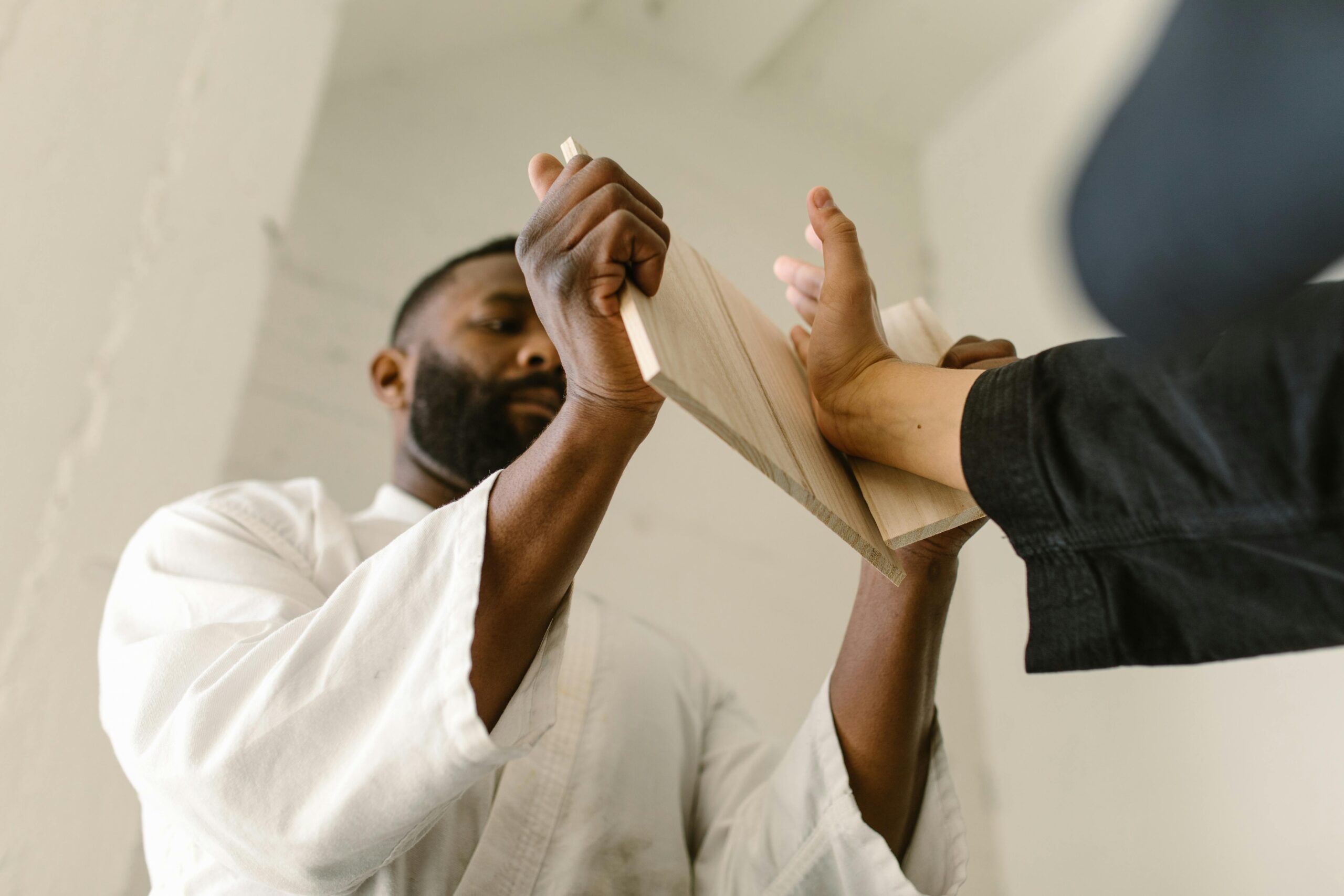
Board breaking represents centuries of martial arts tradition while providing objective measurement of your striking power and accuracy. Unlike subjective assessments, either the board breaks or it doesn’t. This binary feedback creates clear goals and undeniable progress markers.
Modern board breaking for training purposes typically uses rebreakable boards that simulate wood resistance without constant material costs. These tools allow unlimited repetitions while maintaining consistency in resistance levels.
Selecting the Right Boards for Your Level
Rebreakable boards come in various resistance levels, typically color-coded from white (beginner) to black (advanced). Start with boards rated below your perceived ability level to ensure success while learning proper technique. Building confidence matters more than immediately tackling challenging breaks.
Traditional wooden boards remain valuable for testing and demonstration purposes. Standard pine boards of one-inch thickness provide the benchmark for most martial arts breaking. However, wood grain inconsistencies create variability that makes them less ideal for regular training compared to rebreakable alternatives.
Setting Up Safe Board Breaking Stations
Safety must never be compromised during board training. Proper setup includes secure board holders or assistants trained in correct positioning. The board should be held firmly with slight give, not rigidly locked in place. Rigid holding can cause injuries as energy rebounds into your joints.
Always warm up thoroughly before attempting breaks. Cold muscles and joints are vulnerable to strains and sprains. Include dynamic stretching, joint rotations, and graduated intensity kicks into pads before approaching boards.
🔄 The Progression Sequence: From Wall to Board Mastery
Systematic progression prevents plateaus and injuries while building comprehensive kicking ability. This sequence takes months to complete properly, but rushing through stages compromises the foundation you’re building.
Phase One: Static Wall Contact (Weeks 1-4)
Execute each kick type with controlled contact against the wall. Perform 3 sets of 10 repetitions per leg daily. Focus entirely on form rather than power. Record videos from multiple angles to analyze your technique and track improvements over time.
Phase Two: Dynamic Wall Pushing (Weeks 5-8)
Increase pressure against the wall, holding full extension for 5-second isometric contractions. This builds tremendous strength in your stabilizer muscles and reinforces proper structure. Reduce repetitions to 3 sets of 5 per leg to accommodate the increased intensity.
Phase Three: Light Board Introduction (Weeks 9-12)
Transition to white or yellow level rebreakable boards. Focus on accuracy first, ensuring clean breaks through the center of the board. Multiple attempts are perfectly acceptable as you calibrate distance, timing, and power application.
Phase Four: Progressive Resistance (Weeks 13-20)
Gradually advance through board resistance levels as your breaks become consistently clean. Avoid skipping levels even when you feel capable. Each resistance increment builds strength and confidence systematically.
Phase Five: Advanced Applications (Week 21+)
Incorporate multiple board breaks, jumping breaks, and combination techniques. These advanced drills develop explosive power and complex motor patterns that translate directly to sparring and self-defense applications.
Technical Refinement for Specific Kick Types
Each kick requires specific technical adjustments for optimal wall and board training effectiveness. Understanding these nuances prevents frustration and accelerates skill development across your entire kicking arsenal.
Front Kick Precision 🥋
Front kicks rely on linear power generation and precise striking surface contact. When training against walls, maintain a straight line from your hip through your knee to the ball of your foot. Any deviation dissipates power and creates joint stress.
For board breaking, distance calibration proves critical with front kicks. Stand slightly closer than you think necessary—most beginners position themselves too far away, forcing them to reach and compromising structure. The board should break at approximately 80% extension, allowing your hips to drive through the target.
Roundhouse Kick Dynamics
Roundhouse kicks generate power through hip rotation and whipping action. Wall training develops the penetrating power variant where you drive through the target rather than snapping across it. Plant your support foot at 90-180 degrees away from the wall depending on your flexibility and the kick’s target height.
Board breaking with roundhouse kicks requires understanding the difference between instep and shin contact. Instep strikes work well for traditional breaks, while shin conditioning should be approached gradually with appropriate protective equipment and supervised progression.
Side Kick Power Development
Side kicks deliver maximum force when executed with proper hip chamber and heel alignment. Wall training reveals any tendency to turn the kick into a modified roundhouse. Your heel should contact flat against the wall with your toes pulled back, hips fully rotated into the target.
Breaking boards with side kicks demonstrates their devastating power potential. Position yourself perpendicular to the board with proper distance calibration. The chambered knee should point toward the target before extending explosively. Many practitioners find side kicks become their most powerful technique after dedicated wall and board training.
📊 Tracking Progress and Setting Measurable Goals
Objective measurement transforms training from random practice into systematic improvement. Create a training log documenting board resistance levels, successful breaks, technique adjustments, and subjective feedback about power and control.
| Week Range | Primary Focus | Board Level | Success Metric |
|---|---|---|---|
| 1-4 | Form Development | Wall Only | Perfect balance and alignment |
| 5-8 | Strength Building | Wall Pushing | 5-second holds with good structure |
| 9-12 | Initial Breaking | White/Yellow | Clean breaks with 3 or fewer attempts |
| 13-20 | Power Development | Orange/Green | First-attempt breaks consistently |
| 21+ | Advanced Techniques | Blue/Red/Black | Multiple boards and complex breaks |
Regular testing days provide milestone markers. Monthly assessment sessions where you attempt your maximum board level create clear progress indicators. Video documentation from these sessions offers motivational reminders of how far you’ve advanced.
Injury Prevention and Recovery Strategies
Aggressive training methodologies demand equally serious attention to injury prevention. Wall and board work stresses your joints, bones, and connective tissues in ways that build resilience when approached correctly but cause damage when rushed or executed improperly.
Rest days are mandatory, not optional. Your body needs recovery time to adapt to training stresses. Schedule at least two full rest days per week from impact training, though light technique work and flexibility training can continue. Alternating focus between different kick types also provides specific recovery while maintaining overall training frequency.
Recognizing Warning Signs
Sharp pain during execution indicates immediate cessation of that technique. Dull aches after training suggest appropriate stress, while persistent pain signals overtraining or technique flaws. Swelling, reduced range of motion, or pain that worsens over multiple sessions requires professional evaluation before continuing intensive training.
Common overuse injuries include ankle sprains, knee strain, and hip flexor irritation. Proper warmup, gradual progression, and attention to technique prevent most injuries. When injuries do occur, complete healing before returning to impact training prevents chronic problems that derail long-term development.
🎖️ Mental Toughness Through Breaking Training
Board breaking develops psychological fortitude alongside physical prowess. The moment before attempting a break tests your confidence, focus, and commitment. Hesitation guarantees failure, teaching you to attack decisively once you’ve committed to action.
This mental training translates beyond martial arts into daily life. The courage required to kick through a board mirrors the determination needed to pursue challenging goals. Each successful break reinforces your belief in your capabilities, building self-efficacy that permeates all aspects of your life.
Failure teaches equally valuable lessons. Unsuccessful break attempts reveal technical flaws, insufficient power, or mental hesitation. Analyzing these failures objectively and adjusting accordingly develops problem-solving skills and resilience. The board provides immediate, honest feedback without judgment—only results.
Integrating Wall and Board Training Into Your Overall Practice
These drills complement but don’t replace comprehensive martial arts training. Heavy bag work develops endurance and timing under movement conditions. Partner drills teach distance management and adaptive targeting. Sparring applies techniques against unpredictable resistance.
Dedicate 20-30 minutes of your training sessions to wall and board work, typically after warmup but before intensive sparring or conditioning. This timing allows focused technique development when you’re fresh but warmed up, preventing injuries while maximizing learning.
Periodize your training to emphasize different elements throughout the year. Spend several months focused intensively on breaking development, then shift to application phases where you integrate increased power into sparring and self-defense scenarios. This cyclical approach prevents burnout while ensuring comprehensive skill development.
Taking Your Kicks to Competition and Real-World Application
The power and precision developed through wall and board training directly enhances competitive performance and self-defense capability. Competitors find their kicks land with authority that scores points and discourages opponents. Practitioners gain confidence in their techniques’ effectiveness under pressure.
However, remember that boards don’t move, block, or counter-attack. Supplement breaking training with dynamic drills against focus mitts, heavy bags, and trained partners. This integrated approach develops complete kicking proficiency rather than specialization in one training modality.
The psychological edge gained from breaking training shouldn’t be underestimated in competitive contexts. Knowing you’ve kicked through multiple boards provides unshakeable confidence in your technique’s power. This mental state translates into more committed, effective striking during competition and self-defense encounters.
Long-Term Development and Continued Progression
Mastery is a journey without a final destination. After completing the initial progression sequence, continue challenging yourself with increasingly difficult variations. Jumping breaks, spinning techniques, and multiple board stacks provide ongoing development opportunities for years of dedicated practice.
Senior practitioners often return to fundamental wall drills, finding new insights in basic techniques after years of training. This cyclical return to foundations with advanced understanding deepens your mastery and prevents complacency. The wall remains an honest training partner regardless of your rank or experience.
Consider sharing your knowledge by teaching beginners these progression drills. Teaching forces you to articulate technique details you may perform intuitively, deepening your own understanding. Watching students progress through the same challenges you once faced provides unique perspective on the training methodology’s effectiveness.
Your kicking power and precision will transform dramatically through dedicated wall and board training. These time-tested methods build real skill that manifests in every aspect of your martial arts practice. Start with patient, form-focused wall work, progress systematically through board resistance levels, and watch your techniques evolve from basic movements into devastating strikes delivered with absolute confidence. 🥋